
- All
- Product Name
- Product Keyword
- Product Model
- Product Summary
- Product Description
- Multi Field Search
Email:sales@njrecgroup.com
Language
Views: 0 Author: Site Editor Publish Time: 2026-06-01 Origin: Site
Unplanned outages on high-voltage transmission lines cause massive disruptions. Engineering teams constantly battle extreme weather and severe environmental pollution. They must keep regional grids running without fail. Finding the right overhead line components is incredibly tough. Many traditional materials require labor-intensive manual inspections to detect hidden internal faults. These unseen defects and dry-band arcing events can easily derail your grid reliability metrics. You need verifiable, high-strength hardware to maintain peak performance.
We will explore how a toughened glass insulator solves these critical infrastructure challenges. You will learn why IEC-compliant components simplify your visual fault inspections. We will detail how they withstand dynamic mechanical loads and severe weather. You will discover practical profile selection strategies for handling heavy environmental pollution. Finally, we will show you how to seamlessly integrate these overhead suspension lines into your broader substation equipment.
Visual Fault Detection: Toughened glass inherently shatters upon dielectric breakdown, eliminating the need for labor-intensive "zero-value" tower testing required by alternative materials.
Predictable Mechanical Strength: IEC-rated models provide reliable failing load limits (e.g., 70kN to 550kN) capable of withstanding dynamic wind shear, galloping, and ice loads.
Environmental Adaptability: Advanced profiles (anti-fog, aerodynamic) and RTV silicone coatings allow glass to maintain performance across severe Equivalent Salt Deposit Density (ESDD) pollution levels.
Substation Synergy: Suspension insulators must be properly spec’d to ensure compatibility with broader substation infrastructure, including standard transformer and wall bushings.
Designing high-voltage (HV) networks requires a strategic approach to long-term reliability. Overhead transmission lines must endure harsh conditions for a standard 40-year design life. Upfront capital expenditure often dictates initial procurement. However, maintenance efficiency ultimately determines grid viability. Toughened glass excels because it drastically reduces required inspection labor.
You can leverage the clear "zero-value" inspection advantage. Toughened glass features a unique auto-shatter mechanism. Internal defects or extreme electrical stress will cause the tempered glass umbrella to self-destruct. The remaining steel cap and pin remain locked together safely. This fail-safe mechanism prevents string separation and catastrophic line drops. Residual mechanical strength easily holds the tension.
This visible shatter characteristic transforms grid maintenance. You can deploy rapid visual patrols or drone-based helicopter inspections. Line crews spot the missing glass umbrella instantly from a distance. They bypass the individual, live-line instrumental testing required for traditional materials.
Skeptical buyers often weigh glass against other materials. The chart below breaks down these core differences.
Chart: Material Performance Comparison | ||
Material Type | Primary Advantages | Known Weaknesses |
|---|---|---|
Toughened Glass | Auto-shatter visual detection; superior UV resistance. | Higher initial weight compared to composites. |
Porcelain | High thermal stability; strong chemical resistance. | Hidden micro-cracks require manual zero-value testing. |
Composite / Polymer | Lightweight; excellent natural anti-pollution traits. | Prone to moisture ingress tracking and UV aging over time. |
Glass avoids the hidden internal micro-cracks common in porcelain. It delivers highly consistent thermal and chemical stability. When compared to polymers, glass resists UV aging entirely. It will never suffer from moisture ingress tracking. You also avoid purchasing specialized UV-camera diagnostics required for composite degradation.
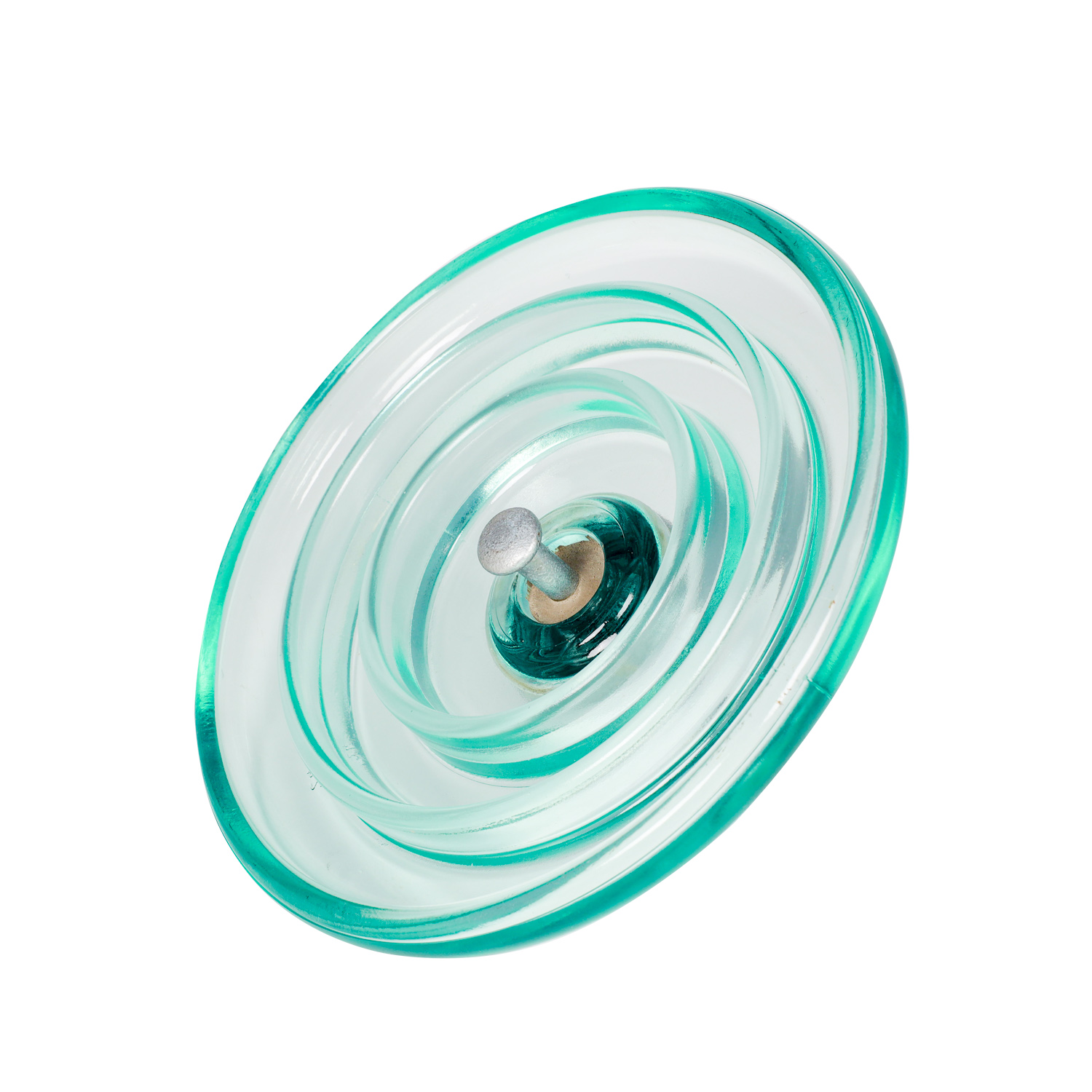
Manufacturers often use compliance as a simple marketing term. However, true IEC compliance goes far beyond checking a box. Adhering to standards like IEC 60383 and IEC 60120 provides your project baseline. It establishes the legal and technical foundation for smooth EPC qualification. Certified products guarantee seamless handovers to utility operators.
You must scrutinize critical IEC testing metrics during procurement. Thermal-Mechanical (T&M) cycling forms a major part of this evaluation. High-voltage hardware experiences extreme temperature variances daily. Standard T&M tests alternate temperatures between -40°C and +60°C under heavy mechanical loads. Top-tier manufacturers routinely exceed the standard four-day IEC cycle. They often execute 15-day tests to prove absolute zero strength degradation.
Dielectric performance represents another non-negotiable metric. Quality hardware must withstand severe electrical stress during storms. Stringent tests verify wet power frequency withstand voltage. Engineers also measure the dry lightning impulse withstand voltage. These metrics ensure the material will not suffer dielectric breakdown during power surges.
You should insist on reviewing comprehensive Factory Acceptance Test (FAT) records. Manufacturers must eliminate manufacturing-stage internal stresses before shipment. We strongly recommend reviewing the following FAT procedures:
Raw Material Inspection: Verify the high-grade silica and alumina purity.
Hydraulic Pressure Testing: Confirm routine pressure tests eliminate micro-fissures in the glass body.
Thermal Shock Validation: Assess the umbrella's ability to survive rapid hot-to-cold transitions.
Routine Mechanical Pull: Verify every unit meets minimum rated tensile limits.
Specifying the right string configuration requires precise engineering calculations. Sizing your mechanical failing loads correctly is vital for safety. Static wire weight only serves as the baseline measurement. Engineers must incorporate dynamic loads into their final calculations. Wind shear, rapid ice accumulation, and aggressive conductor galloping add immense stress.
A standard rule of thumb helps guide preliminary mechanical sizing. A 70kN rating typically suffices for smaller conductors up to 240mm². Heavy-duty applications require significantly more strength. Ratings between 160kN and 210kN provide roughly 21 tons of yield strength. You need this capacity for 630mm² bundled conductors or UHV lines operating between 220kV and 500kV.
You also need an appropriately sized disc suspension insulator to manage electrical creepage. Creepage distance dictates how far electricity must travel across the surface to cause a flashover. Proper distance prevents dangerous surface flashovers during wet conditions.
Baseline creepage metrics vary heavily based on geographic location. Clean rural environments generally require 20 to 25 mm/kV. Coastal regions introduce severe salt spray into the equation. Heavy industrial zones introduce airborne chemical dust. These aggressive environments require extended distances ranging from 31 to 40 mm/kV. The table below outlines typical mechanical load recommendations.
Mechanical Failing Load Guidelines | ||
Application Voltage | Conductor Size | Recommended Minimum Load (kN) |
|---|---|---|
33kV - 132kV | Up to 240mm² | 70kN - 100kN |
220kV - 400kV | 400mm² to 630mm² | 120kN - 160kN |
500kV and Above (UHV) | Bundled Heavy Conductors | 210kN - 550kN |
You cannot deploy a one-size-fits-all solution for diverse topographies. Profile selection must directly align with the Equivalent Salt Deposit Density (ESDD). Failing to match the profile to the pollution level guarantees premature failure. Manufacturers offer specific umbrella shapes tailored to distinct environments.
Standard Profile: Ideal for clean to mild pollution environments. It works well when the ESDD remains below 0.03 mg/cm². This shape relies heavily on natural wind and heavy rain for self-cleaning.
Anti-Fog / Double-Umbrella Profile: Designed for heavy marine or dense industrial pollution. You should select this when the ESDD exceeds 0.10 mg/cm². It provides extensive creepage without increasing string length.
Aerodynamic Profile: Specifically engineered for desert or arid environments. The flat design prevents heavy sand and dust accumulation.
Electrolytic corrosion poses another serious threat in wet environments. DC leakage currents naturally flow across wet surfaces. These micro-currents slowly erode standard galvanized steel pins over time. The metal pin literally rusts away, weakening the mechanical hold.
You can combat this erosion using a high-purity sacrificial zinc sleeve. Quality manufacturers fuse a zinc ring (exceeding 99.8% purity) near the pin cement boundary. The leakage current attacks the zinc instead of the structural steel. This smart design prevents intergranular corrosion and extends the overall service life dramatically.
For truly extreme salt-fog areas, consider RTV silicone coatings. Factories apply Room Temperature Vulcanizing (RTV) silicone directly to the glass. This hybrid approach delivers the mechanical strength of glass and the hydrophobicity of a polymer. The coating forces water to bead up and roll off. It can extend maintenance washing cycles by up to 300 percent.
Overhead transmission lines eventually terminate at a designated substation. This transmission-to-substation handshake requires seamless engineering continuity. Power routed through the substation gantry must maintain perfect electrical coordination. A weak link here will trigger cascading flashovers during a surge.
You must ensure tight component synergies across all boundary hardware. The Basic Insulation Level (BIL) of the overhead strings must match the terminal equipment. Discrepancies between these ratings compromise your grid protection scheme. Stepping down power introduces critical interfaces between different material standards.
Your overhead string will often terminate near a robust porcelain transformer bushing at the step-down phase. The creepage distances between these two components must align. If the overhead string has a longer creepage than the transformer interface, the terminal equipment becomes the weakest link. In North American markets, you must frequently coordinate strings with an ANSI transformer bushing. Strict adherence to ANSI dimensions ensures a flush, weatherproof connection.
Routing power safely into indoor switchgear presents another challenge. This transition typically utilizes an HV dry wall bushing to penetrate the facility boundary. Mismatched insulation coordination between your outdoor glass suspension strings and indoor terminal bushings is dangerous. Uneven pollution accumulation across mismatched profiles creates prime conditions for localized flashovers. Thorough engineering reviews eliminate these costly integration mistakes.
Securing high-quality infrastructure components requires rigorous supplier vetting. Procurement teams must demand strict traceability and comprehensive batch control. You should only partner with ISO-certified facilities. Every glass umbrella and galvanized steel cap must be traceable. You need clear documentation linking the finished product back to its raw material source. Verifying high-grade alumina and silica origins prevents premature material breakdown.
Modern infrastructure mandates often emphasize sustainability. Environmental, Social, and Governance (ESG) compliance matters during public utility bidding. Toughened glass and steel components provide excellent end-of-life recyclability. You can recycle these materials 100 percent. Processors frequently crush the discarded glass umbrellas to serve as durable concrete aggregate. The steel pins easily re-enter the scrap metal supply chain.
Finally, your chosen supplier must offer extensive customization flexibility. Large-scale transmission projects face highly specific topographic constraints. Suppliers must provide modular configurations allowing variable string lengths. They should offer standard ball-and-socket couplings matching your existing hardware. This modularity ensures line crews can adapt quickly to unexpected tower height variations in the field.
Specifying toughened glass components remains a brilliant, data-driven choice for modern grids. Their auto-shatter feature drastically reduces manual inspection labor. They deliver predictable, high-yield mechanical strength capable of surviving violent weather. By selecting the correct aerodynamic or anti-fog profile, you can easily neutralize heavy environmental pollution.
We encourage EPC contractors and utility planners to collaborate closely with component engineering teams. Request detailed load calculations specific to your regional wind and ice patterns. Map your site's exact pollution density before ordering. Properly coordinating your overhead components with substation terminal equipment ensures lasting grid resilience.
A: Yes, up to 800kV and beyond. This is achieved by utilizing long suspension strings combined with extreme high-strength mechanical ratings (up to 550kN).
A: The design is fail-safe. The remaining broken glass gets wedged safely between the metal cap and pin, ensuring the residual mechanical strength is still high enough to hold the line tension and prevent a drop.
A: Base the decision on the Equivalent Salt Deposit Density (ESDD) of the installation site. Standard is sufficient below 0.03 mg/cm², while anti-fog should be specified for anything approaching or exceeding 0.10 mg/cm².


